The Last Mile Lens featuring Nate Skiver, Founder of LPF Spend Management – PART 1
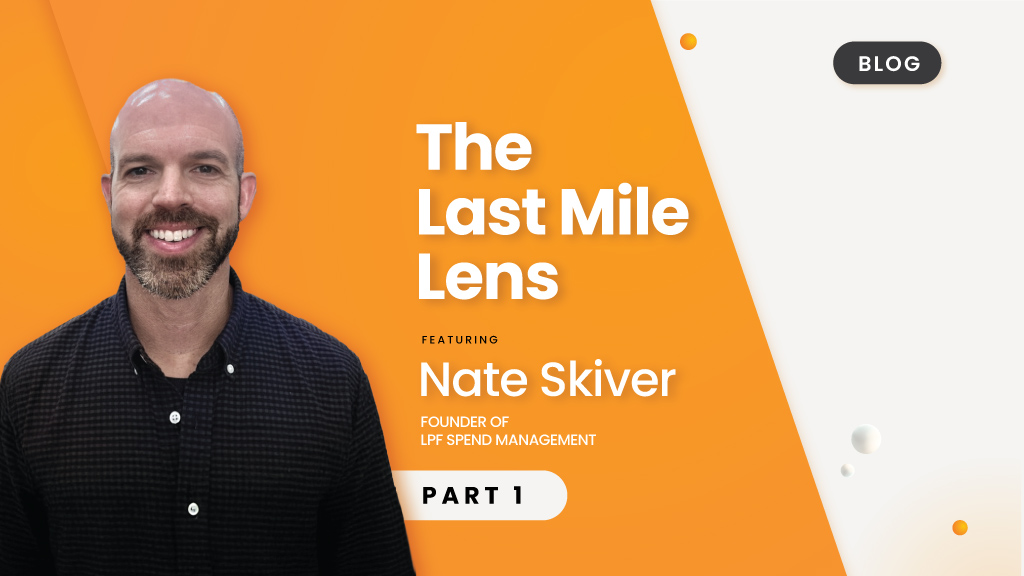
Conversations with the leaders transforming e-commerce, logistics, and the supply chain.
Retailers and e-commerce brands once raced to shave days, and even hours, off of delivery times, betting that speed alone was the ultimate driver of customer satisfaction and loyalty. But consumer priorities have evolved. Shoppers now care less about receiving their orders with lightning speed and more about knowing exactly when their order will arrive. They place greater value on a brand’s reliability and predictability where their deliveries are concerned.
In this edition of The Last Mile Lens, we caught up with Nate Skiver, founder of LPF Spend Management. In part one, we discuss how brands can rethink their delivery strategies to meet shifting customer expectations.
Consumer expectations in retail and e-commerce deliveries have shifted over the past few years, moving from shoppers wanting faster, cheaper deliveries to more convenient and reliable ones. From where you sit, what’s the biggest change brands need to think about (and make) in deliveries to meet these changing consumer demands?
Nate: The biggest challenge is brands not prioritizing delivery in their customer experience. Often, delivery is treated as an afterthought, a budget line item or a cost center. But customers today expect more delivery options, ones that are reliable, fast, low cost, and even free. So, brands can’t provide what their customers expect by doing what they’ve always done.
All of this is to say that brands have to develop a specific delivery strategy to meet customer needs and expectations. And in order for that to happen, delivery has to be prioritized.
Brands are all trying to balance cost efficiency with the demand for speed and flexibility. What strategies are working well right now? And where are brands running into trouble?
Nate: A strategy I see working well balances building a diverse carrier base, obsessively managing costs, and measuring carrier performance. All the ingredients are there and available for brands to offer cost-effective delivery speeds. And there are plenty of different carrier options, competitive pricing, and technology available to optimize cost, speed and delivery reliability. But it takes time, effort and diligence to be able to develop a plan and execute it. Brands willing to put in that work gain real value from carrier diversification.
Where some struggle is being afraid to take calculated risks. Brands have to test delivery concepts and measure the results to find out if they actually provide the value expected. But they can’t wait until they’re 100% sure it’s going to work before implementing it.
Let’s stay here for a minute. We’re seeing more and more brands test things like carrier diversification, lockers and scheduled delivery windows. In your view, which of these are really moving the needle for brands and their customers?
Nate: If done well, it’s carrier diversification. Actually building a diverse carrier base where each carrier meets a specific need is critical for diversification to work. It’s not just adding one or two carriers arbitrarily. It’s having a very specific plan with different carriers offering delivery speed or flexible capacity or lower costs and fitting them into your program to meet your needs.
As for lockers, pickup points and delivery windows, the value there depends on a brand and its customers. The key here again is testing. Test, measure results, adjust and move on to the next item. Don’t wait forever trying to determine the best solution or get to the right ROI, you have to be more agile and continue to test solutions until you find the right ones.
In part two, Nate shares practical ways to weave logistics into the brand experience, the most overlooked opportunities to build loyalty, and his advice for preparing for peak season.